A £4.8 million investment will accelerate automation in UK agriculture and food production, with the University of Lincoln launching a new robotics hub called HARVEST. The funding, part of a £7.1 million package, is designed to bridge the gap between emerging robotic technologies and their real-world adoption by agri-food businesses.
The hub will provide access to testing facilities, technical expertise, and a £1 million Acceleration Fund to help robotics companies overcome adoption barriers. A dedicated robotics test track at the university’s Riseholme Park Campus will allow developers to validate technologies in practical conditions. The initiative also includes industry-led Living Labs, where businesses can collaborate on refining robotic systems for supply chain use.
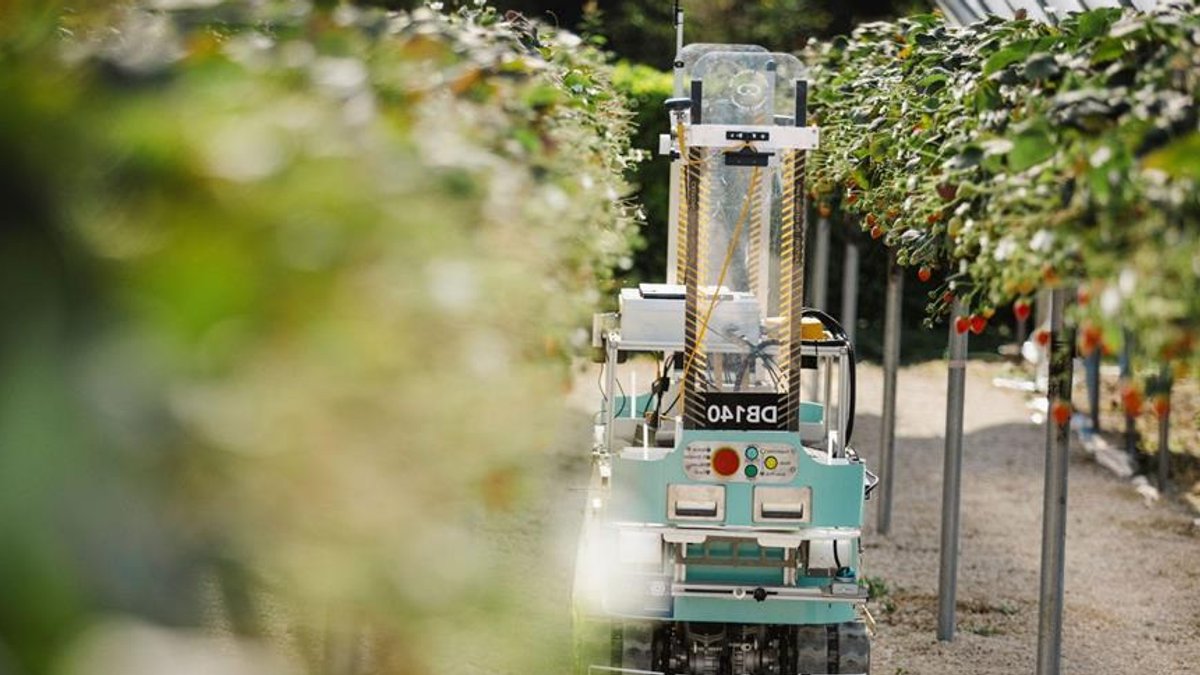
HARVEST is one of eight Robotics Adoption Hubs selected nationally through Innovate UK’s program, part of the UK’s broader push to modernize advanced manufacturing. The hub will unite developers like Saga Robotics, Dogtooth Technologies, and Dyson Farming Research with agri-food companies, including Cranswick, to test and validate automation solutions.
For smaller farms, the biggest hurdles to adopting robotics remain high costs, financing gaps, and uncertainty over returns. A 2026 report by the Department for Environment, Food and Rural Affairs (Defra) noted that most automation projects under its Farming Innovation Programme are still in research phases, with limited real-world impact on labour shortages or productivity. HARVEST’s focus on hands-on testing could help businesses assess risks before full-scale deployment.
While established manufacturers like Mars have already committed £190 million to AI-driven automation at its Slough chocolate factory, smaller producers often lack the resources to adopt similar technologies. The hub’s Living Labs and test track aim to lower that barrier by letting companies experiment with robotic systems in controlled settings. Professor Simon Pearson, Executive Director of HARVEST, emphasized that the funding will address technical, commercial, and workforce challenges in the sector.
Beyond testing, the hub will integrate expertise from partners like Barclays Eagle Labs and Agri-TechE, which will assist with commercial development and industry engagement. The goal is to turn lab-proven innovations into scalable solutions that work across diverse agricultural and food production environments.